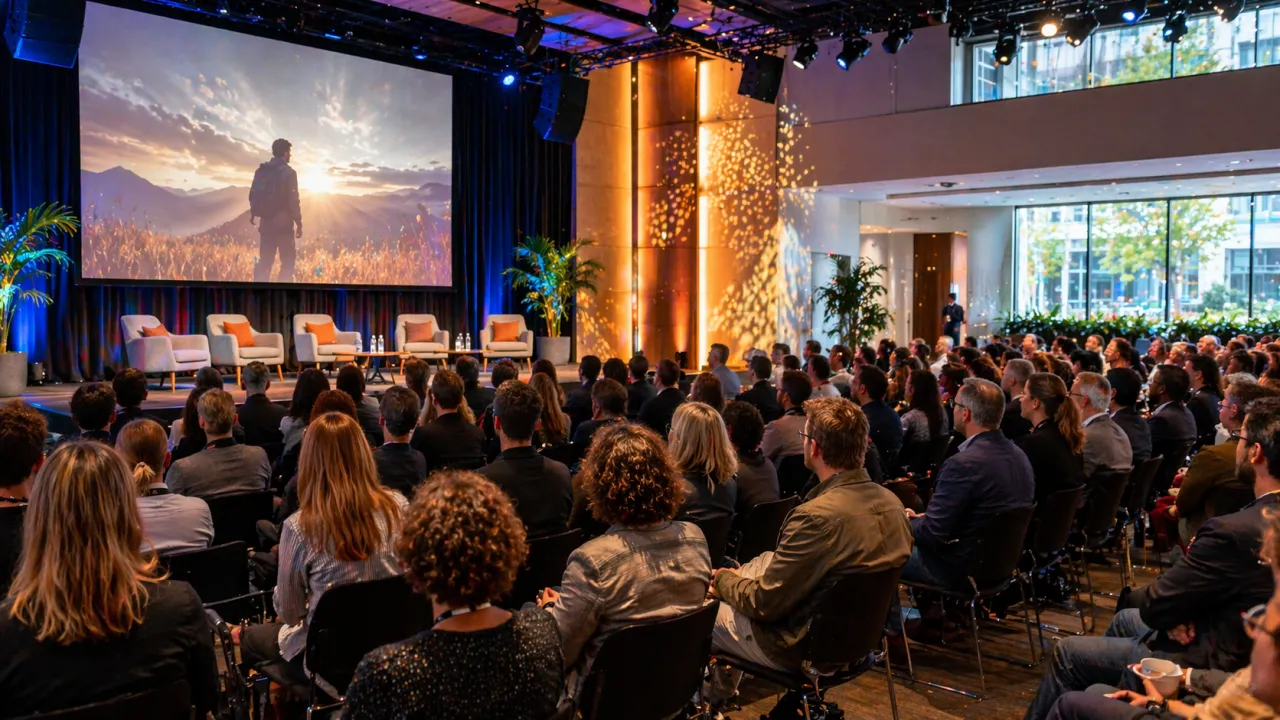
Events and conference screenings work when a film is closely connected to a subject, industry, community, or professional audience. Instead of waiting for general distribution, the film is licensed to organizations that already gather the exact people most likely to care about it.
That can make this route surprisingly practical. A conference, company, nonprofit, trade group, or curated event may pay for a screening because the film adds value to their programme, audience, or internal conversation.
For the right film, this is not only exposure. It is a paid screening route built around relevance.
What you need to know
- Events and conference screenings are usually paid through one-off licence fees or event-based agreements.
- This route is strongest when the film fits a clearly defined audience or topic.
- The value comes from relevance, not mass reach.
- One film can sometimes generate multiple paid screenings across different organizations.
- Early event interest can also help strengthen financing or outreach conversations.
How does it work?
An organizer licenses the film for a specific event, audience, or internal programme. That may be a conference screening, a private organizational screening, a themed event, or a curated discussion built around the film.
The fee is usually based on the audience, the event context, and the usefulness of the film to that setting. In some cases, the event is purely a screening. In others, it may include a discussion, panel, workshop, or speaker element around the film.
Where does it apply best?
- Films connected to a specific topic or industry
- Projects with clear audience groups or communities
- Films suitable for live or curated screenings
What needs to be in place?
- A film connected to a defined audience or topic
- A clear way to present the film to event organizers
- A screening version ready for delivery
- Basic materials such as synopsis and visuals
- A plan for how screenings will be used
Events and conference screenings work best when the film is clearly useful to a real audience gathered in one place. The stronger the fit between the film and the event, the easier it becomes to turn a screening into paid access.
Event screenings become more realistic when the film is positioned as something an organizer can actually use. The practical question is not only who might like the film. It is who already gathers the right audience and has a reason to include it in a programme.
That is why this route usually works best when you start with the audience, then match the film to the kinds of events, organizations, or institutions already serving them.
Screening at industry conferences
Primary driver: Audience relevance → screening fee.
- Identify conferences related to the film’s subject
- Position the film as valuable to their audience
- Offer a screening as part of the program
- Secure a paid screening agreement
- Use the event to reach a targeted audience
This works especially well when the film helps frame a topic the conference is already built around.
Partnering with organizations for private screenings
Primary driver: Targeted audience → licensed screening.
- Approach organizations connected to the film’s topic
- Offer private screenings for their members or audience
- Structure a licence fee per event
- Build multiple screenings across organizations
- Generate revenue through repeated events
This can be a strong route for films connected to social issues, communities, industries, or mission-aligned groups.
Using screenings to support outreach campaigns
Primary driver: Engagement → event-based distribution.
- Align screenings with campaigns or initiatives
- Partner with groups already working in the space
- Organize events with discussions or panels
- Extend the film’s reach through engagement
- Combine revenue with visibility
For some films, the screening becomes more valuable when it is part of a wider conversation rather than a standalone showing.
Selling screenings to corporate or institutional events
Primary driver: Internal use → paid access.
- Identify companies or institutions aligned with the topic
- Offer screenings for internal events or programs
- Set a fixed fee for usage
- Deliver the film for specific events
- Build a series of paid screenings
This is often strongest when the film connects to leadership, culture, training, ethics, inclusion, or a subject already relevant inside the organization.
Using early screenings to support financing
Primary driver: Early interest → leverage.
- Secure interest from event organizers before completion
- Use commitments to support financing conversations
- Demonstrate audience demand
- Position the film within real-world events
- Strengthen the overall project
Even early commitments can help show that the film already has a defined path to audience and paid use.
What usually makes this route stronger?
- a clearly defined audience
- a subject with event or industry relevance
- a simple screening offer organizers can understand quickly
- the ability to match the film to real programmes and gatherings
- materials that make booking the film easy
The strongest event-screening strategy usually begins when the film is easy to place inside an existing programme and easy for the organizer to justify to their audience.